TemporaAI
Complete Unmaintained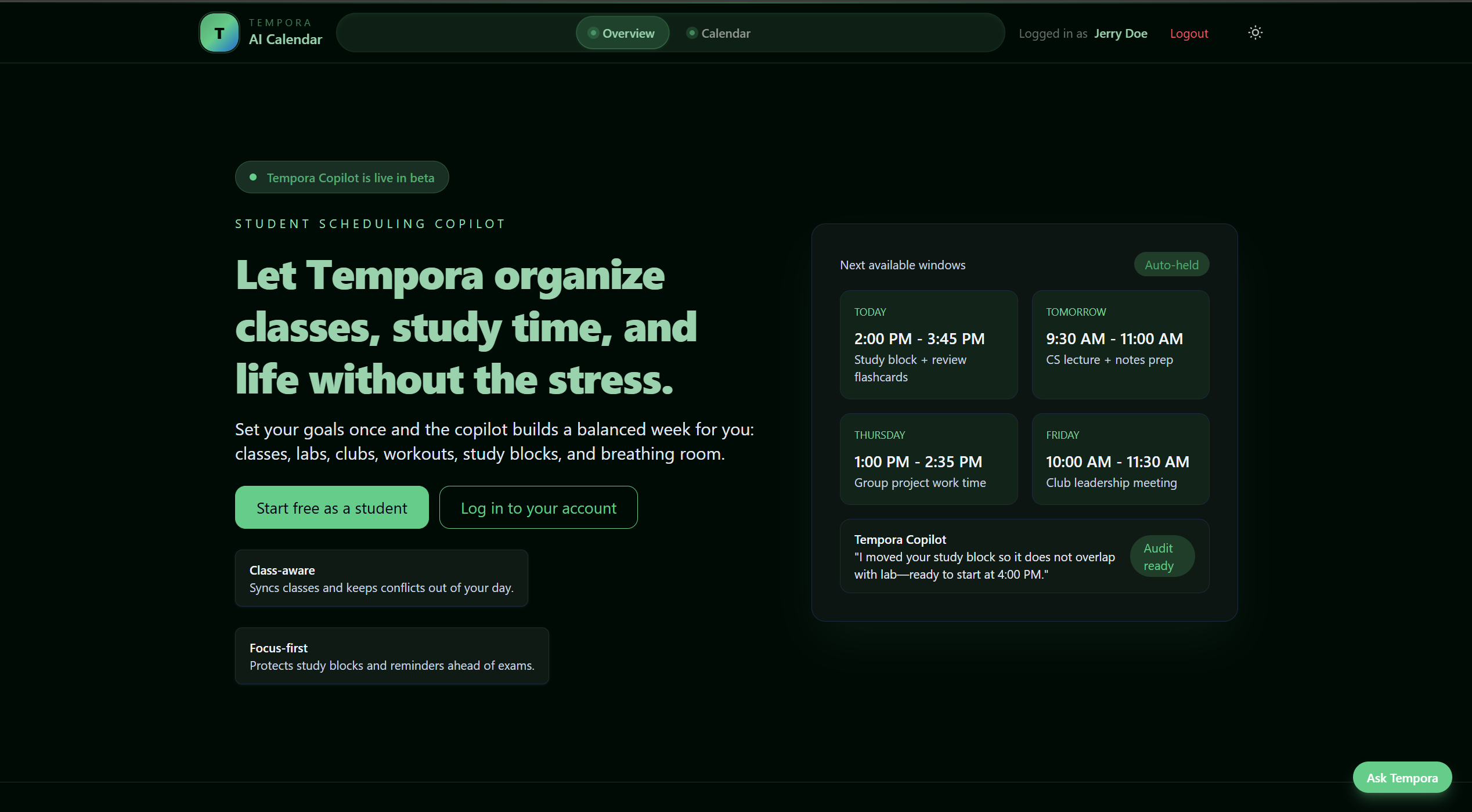
TemporaAI is developed as a professional web-based application using the NextJS React framework, TypeScript for type safety, and a PostgreSQL database managed with Prisma ORM for scalable backend storage of user scheduling data. The central intelligence of the application is built on Large Language Models (LLMs), which utilize the transformer architecture to perform advanced tasks such as natural language processing (NLP), reasoning, and multimodal understanding. This allows the system to ingest unstructured user input, including flexible formats like natural language text, direct data formats, and even image-based scheduling data (syllabi, timetables) via Optical Character Recognition (OCR), and convert it into a structured Schedule DB Object for internal management.
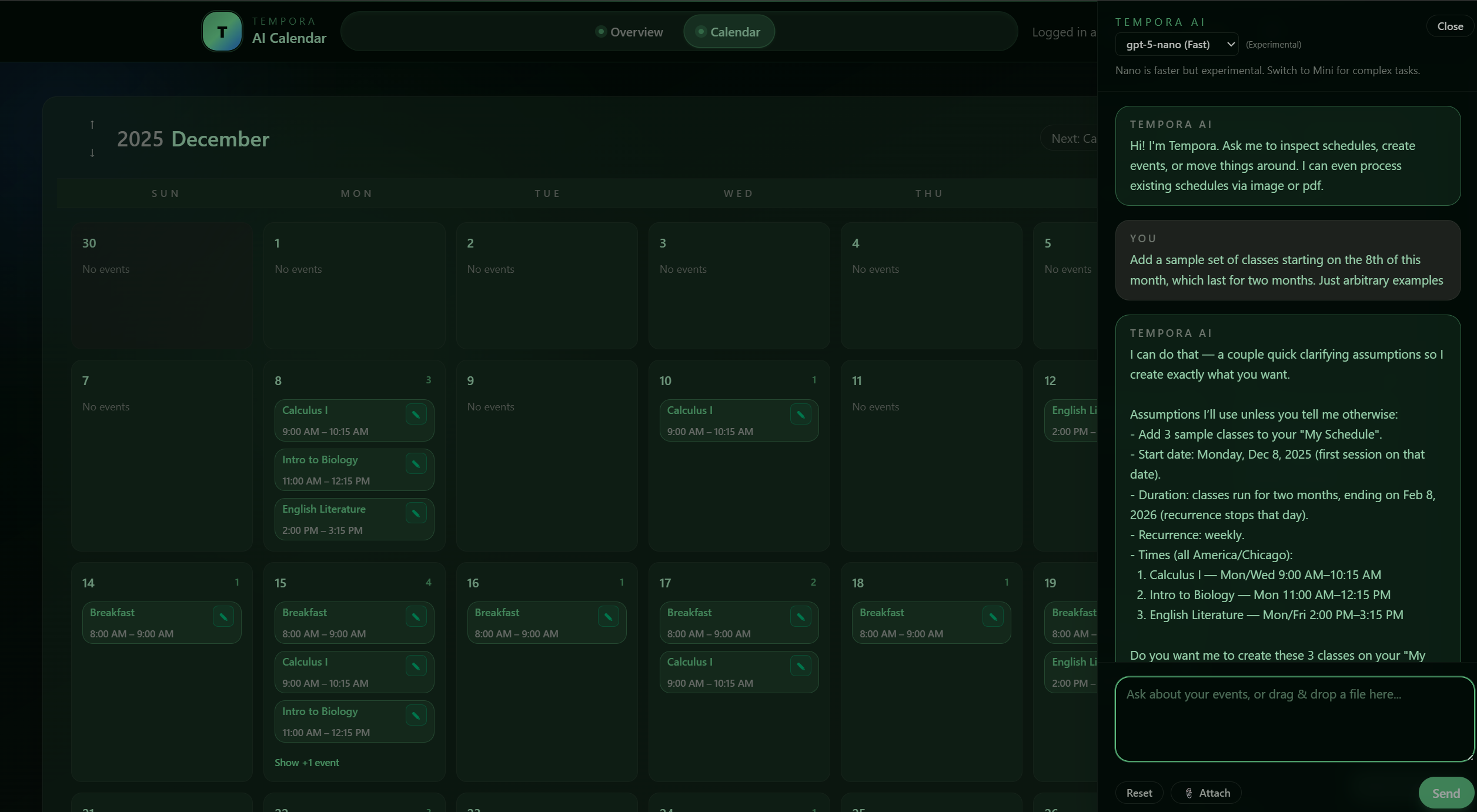
To ensure the AI's scheduling logic is personalized and accurate, the system implements two key advanced AI techniques: Retrieval-Augmented Generation (RAG) and Agentic Tool Use. The RAG pipeline functions by converting a user's query into a vector (an embedding) and retrieving the user's existing schedule constraints from the knowledge base. This critical information then grounds the LLM, enabling it to propose new event placements that avoid conflicts and adhere to the student’s current obligations. Agentic Tool Use allows the AI model to go beyond simply suggesting a solution; it is capable of autonomously invoking specific functions via structured JSON calls to modify the Schedule DB, thereby directly implementing its scheduling decisions, such as automatically creating a new event.
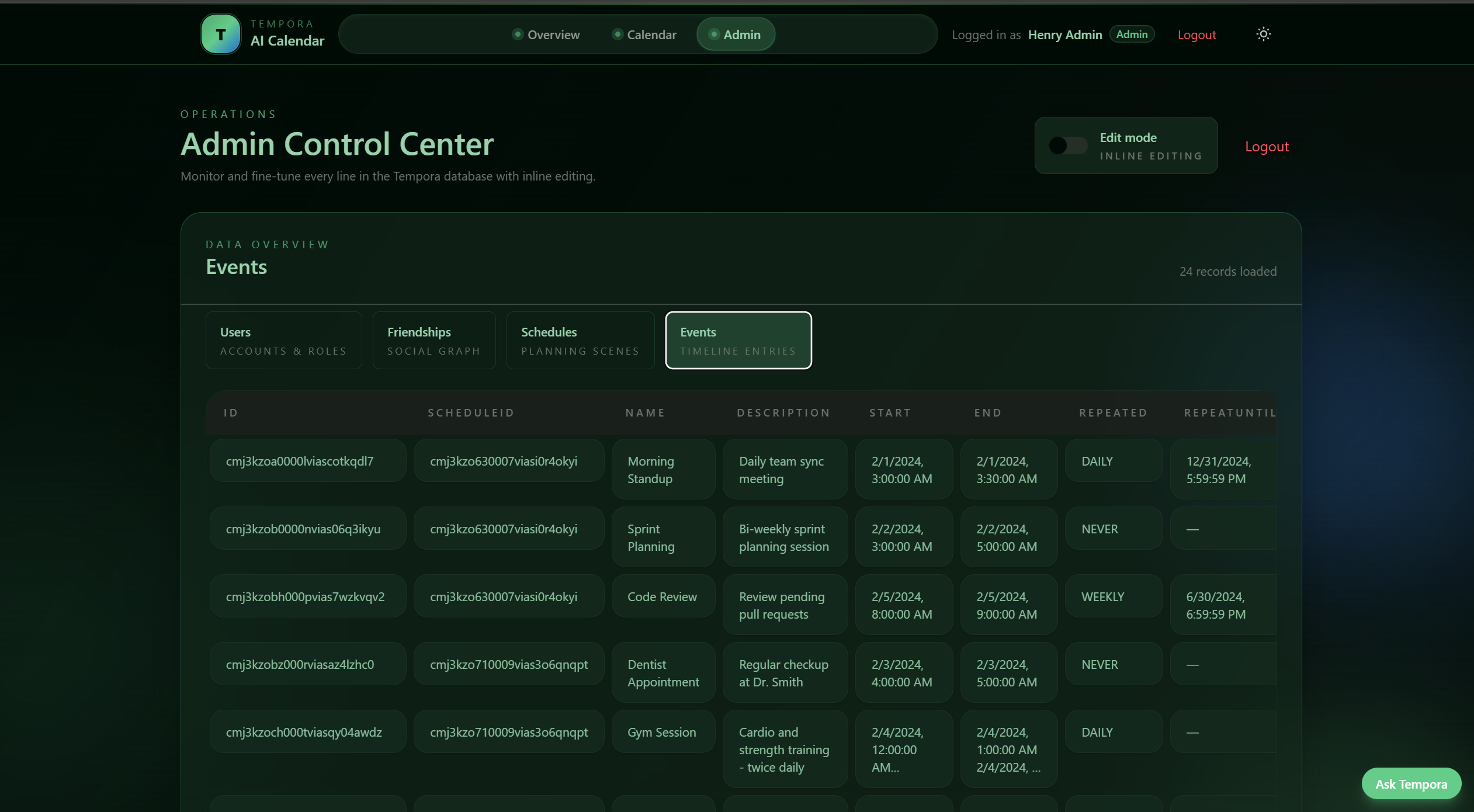
The prototype's two core functionalities are AI-Powered Schedule Generation/Combination and AI-Powered Group Event Planning. The former allows flexible input for creating and combining individual schedules with minimal effort, even allocating personal time like exercise and sleep. The latter allows multiple users to input their requirements in natural language, and the system automatically schedules a new event that fits all group members. However, the current prototype has limitations, most notably the deferred implementation of full API integration with external calendar services like Google Calendar and Microsoft Outlook, as well as direct connectors for LMS platforms like Canvas. As a result, the current system functions primarily as a standalone tool, with future work planned to add secure, bidirectional connectors for seamless synchronization across platforms.